Tenant or Landlord: Who Pays for Plumbing Repairs?
NZ tenancy law: landlords must maintain the plumbing, and a hidden leak’s excess water bill is generally not yours to pay. The escalation path, step by step.
Need a plumber now?
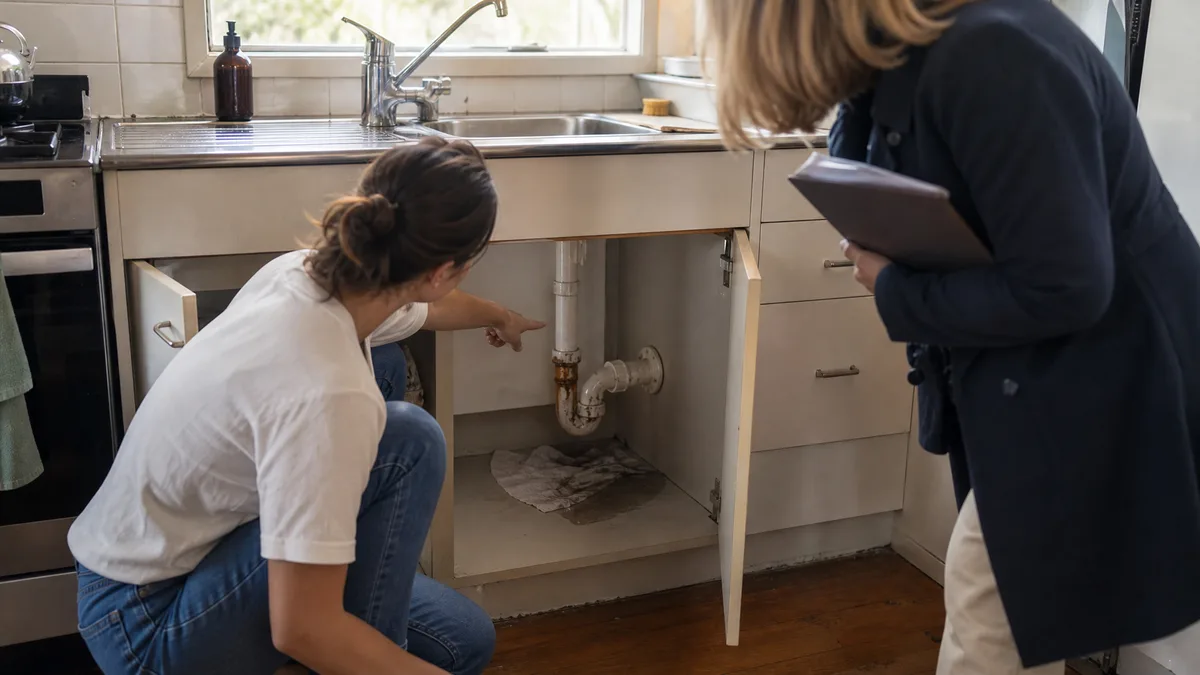
The scenario shows up in NZ legal advice forums every month: a tenant opens a water bill that is three or four times normal, discovers a leak somewhere in the property’s pipes, and the landlord shrugs — “the water account is in your name, so it’s your bill.” That position is mostly wrong, and the law is more tenant-friendly than most renters realise. Here is who actually pays for what, and the exact escalation path when a landlord will not move.
What does the law say the landlord must do?
Under section 45 of the Residential Tenancies Act, the landlord must provide and maintain the premises in a reasonable state of repair — and that explicitly includes the plumbing. Pipes, hot water cylinder, taps, toilet, drainage: keeping them working is the landlord’s job, at the landlord’s cost. A landlord cannot contract out of this in the tenancy agreement, and cannot pass ordinary maintenance costs to the tenant.
So when a pipe corrodes, a cylinder fails, or an underground supply line springs a leak through no fault of yours, the repair bill belongs to the landlord. Full stop.
What are the tenant’s obligations?
Two, and they matter for the water-bill argument later:
- Report faults promptly. As soon as you notice a leak, a running toilet, a damp patch, or an abnormally high water bill, tell the landlord — in writing (email or text is fine; you want a timestamp). If you sit on a known leak for two months, the excess from those two months becomes much harder to push back on.
- Do not cause the damage. If the fault results from tenant damage — say, something driven through a pipe while hanging a mirror — the tenant carries the cost. Fair wear and tear, ageing pipes and hidden failures are not tenant damage.
Who pays the water bill after a hidden leak?
The clean split:
- Normal metered usage — the tenant’s, where the tenancy agreement passes on metered water charges (standard in Auckland, where Watercare bills per cubic metre).
- The excess caused by a hidden leak — generally the landlord’s problem. The leak is a maintenance failure, and a tenant should not be charged for water that vanished into the ground because the landlord’s pipes failed. The Tenancy Tribunal has consistently taken this view where the tenant reported the leak promptly.
The key word is reported. Your protection runs from the moment the landlord knew or should have known. Report early, in writing, every time — even for a suspicion. If you cannot see a leak but the bill has jumped, ask the landlord to get a leak detection specialist in; finding a hidden leak is a routine, non-invasive job for the right operator, and typical Auckland pricing is on our price guide.
What is the escalation path when the landlord won’t act?
Work the ladder in order. Most disputes end at step one or two.
- Written notice. Email the landlord or property manager: describe the fault, the date you noticed it, attach photos and the abnormal bill, and ask for repair within a reasonable time. Keep it factual.
- 14-day notice to remedy. If nothing happens, serve a formal 14-day notice — a standard Tenancy Services form that tells the landlord exactly what to fix and gives them 14 days to do it. This is the step landlords take seriously, because ignoring it strengthens every later claim you make.
- Tenancy Tribunal. Still nothing? File. The fee is around $20.44, you do not need a lawyer, and the Tribunal can order the repair, order compensation for the leak-inflated bills, and award exemplary damages where a landlord has failed their section 45 obligations. Bring your paper trail — the written notice, the 14-day notice, the bills, the photos. Documented tenants win.
- Watercare leak remission. In parallel, once the leak is fixed, the account holder can apply for Watercare’s leak allowance for hidden leaks — it credits a portion of the excess charges. The plumber’s invoice is required proof, so make sure someone keeps it. If the account is in your name, apply yourself; it shrinks the disputed amount for everyone.
Can I just get it fixed myself in an emergency?
Yes — with conditions. The RTA allows a tenant to arrange urgent repairs and recover the reasonable cost from the landlord where:
- the fault is genuinely urgent — a burst pipe flooding the laundry, sewage backing up, total loss of water — not a slow drip you would like fixed faster;
- you made reasonable attempts to contact the landlord first and they were unreachable or refused to act; and
- the cost you incur is reasonable for the job.
Practical version: ring and message the landlord, screenshot the attempts, then call a licensed plumber from our 24/7 emergency list. Ask the plumber to make the situation safe and stop the damage — full remediation can wait for the landlord. Keep the invoice; that is what you recover. If the landlord refuses to reimburse a legitimate emergency repair, that is another matter the Tribunal deals with routinely, for the same $20.44.
The two-minute protection habit
Everything above collapses into one habit: put it in writing the day you notice it. A tenant with a dated email trail — fault reported, bill attached, 14-day notice served — is in a commanding position at the Tribunal. A tenant who mentioned it verbally “a few times, months ago” is negotiating from hope. The law does its job when you can show the dates.
Burst pipe? No hot water?
Compare licence-checked Auckland plumbers — 24/7 emergency options flagged, honest price guides published.
Need a Plumber You Can Trust?
Every listing in our directory is checked against the PGDB register before it goes live — compare licence-checked Auckland plumbers with honest price guides.