Hot Water Cylinder Replacement Cost Auckland
What Aucklanders actually pay to replace a hot water cylinder — real invoices, low vs mains-pressure pricing, and the free checks to run before you call anyone.
Need a plumber now?
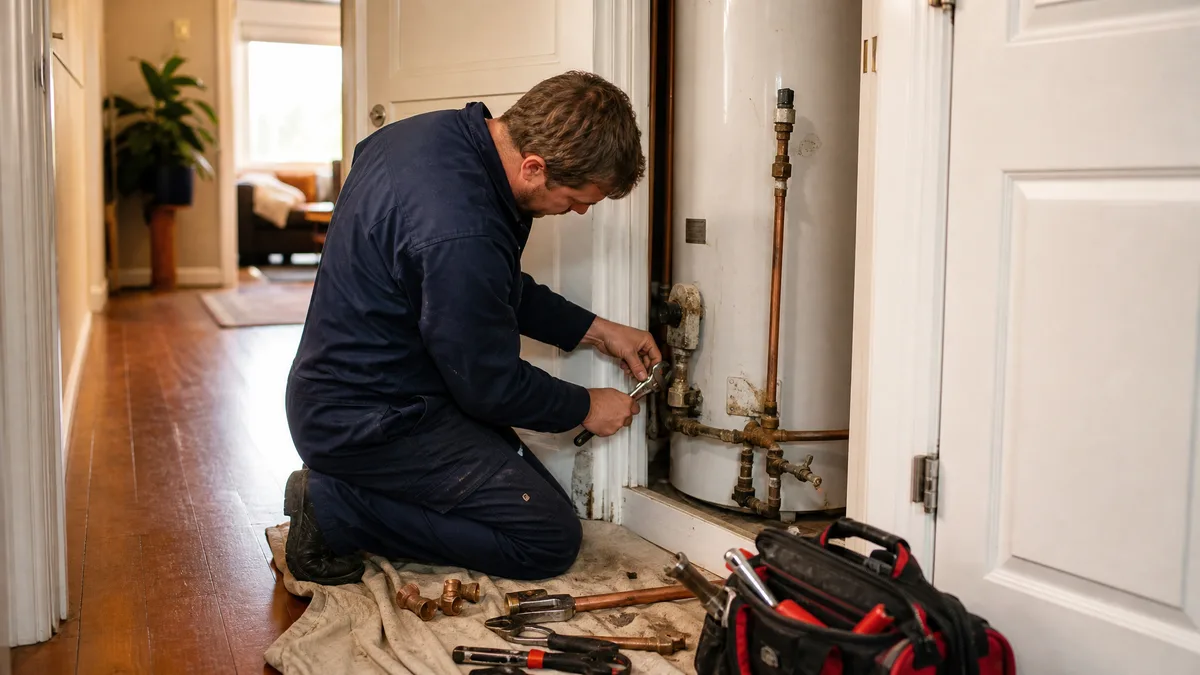
Hot water cylinder replacement is the single most complained-about plumbing job in Auckland — not because plumbers are villains, but because the price range is wide, the quotes are vague, and most homeowners are buying one for the first time with cold water coming out of the shower. This guide gives you the real numbers, two anonymised real-world invoices, and the free two-minute checks to run before you ring anyone.
What does a cylinder replacement actually cost in Auckland?
Installed, GST-inclusive ballparks for a straightforward swap:
- Low-pressure cylinder (like-for-like): around $1,800–$3,500 installed. Low-pressure systems are the older NZ standard — copper cylinder, header tank or pressure-reducing valve, gentle shower flow.
- Mains-pressure cylinder: around $2,500–$5,000+ installed. More expensive cylinder, more valve work, and if you are converting from low pressure the tempering valve, pipework and sometimes wiring get touched too.
The spread within each band comes from cylinder size (135L vs 180L vs 300L), access (a cylinder cupboard on the ground floor vs a roof cavity), valve and restraint requirements, and how much of the surrounding pipework is at the end of its life. For a wider view of Auckland trade rates, see our price guide.
Why did a $1,500 estimate become $3,000? (A real example)
An Auckland homeowner was given a verbal estimate of $1,500–$2,000 to replace a failed cylinder. The final bill: $3,000+GST. Anonymised, but the pattern is common enough to be a template. Where the extra ~$1,400 came from:
- Relocation triggered extra work. The new cylinder went in a different spot, which meant new pipe runs — and moving a cylinder can trigger consent or certification requirements a like-for-like swap avoids. None of that was in the verbal number.
- Tempering valve upgrade. Current rules require hot water delivered to sanitary fixtures at a safe temperature; touching the system meant bringing the tempering valve arrangement up to standard. Legitimate cost — but it was never quoted.
- Seismic restraints. Cylinders must be restrained against earthquake movement. The straps and fixing time appeared on the invoice, having never appeared in the estimate.
Every one of those items is defensible work. The failure was that the plumber gave a bare-cylinder number verbally, and priced the actual job afterwards. That is the difference between an estimate and a quote — covered in detail in our fair quote guide.
What does a fair, itemised job look like?
For contrast, here is an anonymised Auckland invoice for a like-for-like low-pressure replacement that came in at $2,500+GST — with every line visible:
- 135L low-pressure cylinder — $1,373
- Pipes, valves and fittings — $442
- Labour: 3 hours × $105/hr — $315
- Plus callout, disposal of the old cylinder and sundries making up the balance
Notice what an itemised bill lets you do: sanity-check the cylinder price against retail, see the hourly rate, and see the hours. Nothing to argue about, because nothing is hidden. If a quote you receive is one number on one line, ask for it broken out exactly like this — a plumber confident in their pricing will not hesitate.
Should I repair or replace?
The decision is more mechanical than plumbers sometimes make it sound:
- Tank leaking + cylinder over ~10 years old → replace. A weeping tank means the cylinder itself has corroded through. There is no economic repair, and it fails wetter from here.
- No hot water, tank sound → repair. A failed element or thermostat is a $150–$400 fix and a routine visit. Do not let anyone turn a dead element into a new cylinder without showing you the leak.
- Dripping from the TPR valve or overflow → often a valve fix. Valves are consumables. A steady drip is frequently a $150–$350 valve replacement, not a system failure.
Our hot water hub lists Auckland plumbers who do both repairs and replacements — worth noting, because an outfit that only sells installations has one answer to every question.
Do I need a building consent?
The rule most Aucklanders never hear: a like-for-like cylinder swap in the same location is usually exempt from building consent under Schedule 1 of the Building Act, provided it is done by an authorised person. Where consent or extra certification typically does come into play:
- Relocating the cylinder to a new position;
- Changing system type in ways that go beyond a straight swap;
- Converting to gas — which also legally requires a certifying gasfitter and must end with a gas certificate in your hand. Gas conversions live on our gasfitting page.
A trustworthy quote states the consent position explicitly. “Don’t worry about it” is not a consent position.
Is annual cylinder servicing worth paying for?
Mostly, no. “Cylinder servicing” contracts — an annual visit for a recurring fee — are heavily marketed and thin on substance. A conventional electric cylinder has almost nothing to service: the meaningful check is operating the TPR (temperature pressure relief) valve, which takes minutes, and a visual once-over for weeps and corrosion. Any plumber can do it while on site for something else. Pay for repairs when something fails; be sceptical of subscriptions for a tank of hot water sitting in a cupboard.
No hot water? Run these free checks first
Before you book anyone, two minutes at the switchboard can save you a $90–$150 callout:
- Check the switchboard. Look for a tripped breaker or blown fuse on the hot water circuit — it is usually labelled. Reset it once. If it trips again, stop and call someone; do not keep resetting.
- Check the hot water switch. Many NZ homes have a dedicated wall switch (often in the hot water cupboard or by the switchboard) that gets knocked off during cleaning or by curious kids. Confirm it is on.
- Check for a tripped thermostat. Some cylinders have a manual-reset cutout that trips on over-temperature. If yours is accessible and clearly marked, one reset is fair game — repeated tripping means the thermostat or element needs a professional.
If all three check out and the water is still cold — or the tank is visibly leaking — then it is a genuine callout. For a leaking cylinder soaking the hallway carpet, go straight to the 24/7 emergency list and turn off the cylinder’s isolating valve (and the power) while you wait.
Burst pipe? No hot water?
Compare licence-checked Auckland plumbers — 24/7 emergency options flagged, honest price guides published.
Need a Plumber You Can Trust?
Every listing in our directory is checked against the PGDB register before it goes live — compare licence-checked Auckland plumbers with honest price guides.