What a Fair Plumbing Quote Looks Like in NZ
The 5 lines every plumbing quote must show, the legal difference between a quote and an estimate in NZ, and what to do when the final bill lands over.
Need a plumber now?
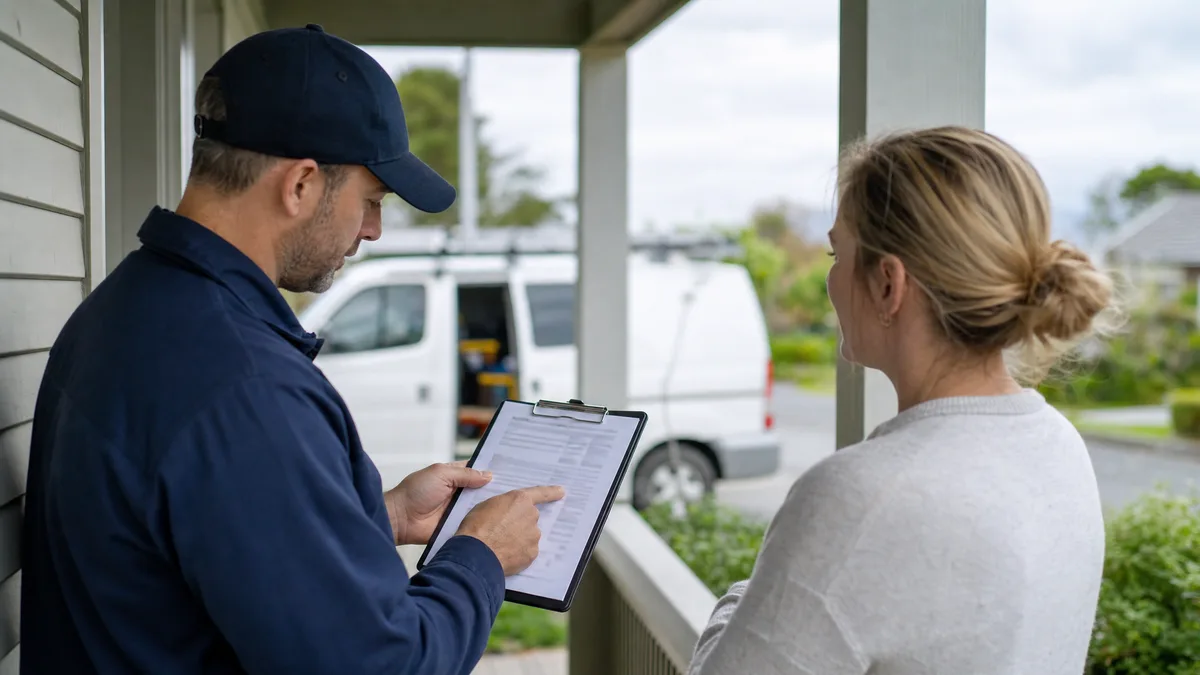
Most plumbing bill shock in Auckland traces back to one moment: the homeowner said yes to a number that was never actually a price. This guide covers the quote-vs-estimate distinction that NZ law cares about, the five lines every real quote shows, and — because sometimes it is already too late — the exact dispute path when a bill balloons.
Is that a quote or an estimate? (The difference is legal, not semantic)
In New Zealand the two words carry different weight:
- A quote is a fixed-price offer. Accept it and the plumber is generally bound to complete the described work for that price. It can only move through variations you agree to.
- An estimate is an informed guess with no commitment attached. A bill 40% above an estimate can be lawful; a bill 40% above an accepted quote, for the same scope, generally is not.
Tradespeople understand this distinction precisely, which is why vague verbal numbers are so common. Your move is simple: ask “is that a quote or an estimate?” and get the answer in writing. Email is fine. Silence or a shrug means estimate — treat the number as decorative.
What are the 5 lines every quote must show?
A fair plumbing quote is boring to read. It shows:
- Labour rate — the hourly charge. Auckland plumbers typically run $95–$150+GST per hour.
- Estimated hours — so you can see whether you are being quoted 3 hours or 8 for the same job.
- Materials — the cylinder, pipe, valves and fittings, priced. You should be able to sanity-check the big-ticket items against retail.
- Callout fee — stated, or explicitly waived. Typical Auckland callouts are $50–$120; after-hours multiplies it.
- GST status — whether every figure is GST-inclusive or exclusive. The difference on a $3,000 job is $450, and “plus GST” discovered at invoice time is the oldest trick in the book.
A single number on a single line is not a quote — it is an opening position. Compare anything you receive against our Auckland price guide before accepting.
How do I stop a job ballooning mid-way?
One sentence, added in writing before work starts, prevents most disputes:
“Any variation or overrun beyond 10–15% of the quoted price requires my written approval before the work continues.”
Legitimate surprises happen — a wall opens up and the pipework behind it is rotten. A good plumber photographs the problem, prices the variation, and waits for your yes. A cowboy keeps working and presents the total at the end. The clause forces every plumber into the first behaviour, and no reputable tradesperson will resist it. If one does, that tells you what you needed to know — our vetting process exists for exactly this reason.
What if no price was ever agreed?
It happens constantly in emergencies: water everywhere, plumber summoned, nobody talks numbers. You are not defenceless. Under the Consumer Guarantees Act, where no price is agreed, you are entitled to pay no more than a reasonable price for the work — reasonable being what competent plumbers in Auckland would typically charge for that job. An invoice for $1,900 to replace a toilet cistern valve fails that test, and you can say so.
Separately, the Fair Trading Act prohibits misleading conduct — which covers quoting practices. A deliberately lowball number used to win the job, with no intention of honouring it, is not just bad manners; it is the kind of conduct the Act exists to catch.
What is the dispute path when the bill has already landed?
Work the ladder in order, in writing at every step:
- Complain to the business first. Set out the quote, the invoice, and the gap. Ask for an itemised breakdown of every line above the quote. Pay the undisputed portion promptly — it keeps you unimpeachable — and dispute the rest.
- Master Plumbers complaint service. If the firm is a Master Plumbers member, the association runs a complaint process, and membership includes a workmanship guarantee. Members care about keeping the badge.
- Disputes Tribunal. For claims up to $30,000, no lawyers, modest filing fee, decisions binding. Bring the written quote, the invoice, photos and your correspondence. Homeowners with a paper trail do well here; homeowners with a remembered phone call do not.
The 8-point checklist before you say yes
Print this, or keep it open on your phone when the quote arrives:
- The document says “quote”, not “estimate”.
- Labour rate is stated per hour.
- Estimated hours are stated.
- Materials are itemised with prices.
- Callout fee is stated or waived in writing.
- GST status is explicit on every figure.
- A variation clause requires your written approval beyond 10–15%.
- The plumber’s PGDB licence checks out — search the public register, or pick from our licence-checked directory.
Eight ticks takes five minutes. It is the cheapest plumbing insurance in Auckland.
Burst pipe? No hot water?
Compare licence-checked Auckland plumbers — 24/7 emergency options flagged, honest price guides published.
Need a Plumber You Can Trust?
Every listing in our directory is checked against the PGDB register before it goes live — compare licence-checked Auckland plumbers with honest price guides.